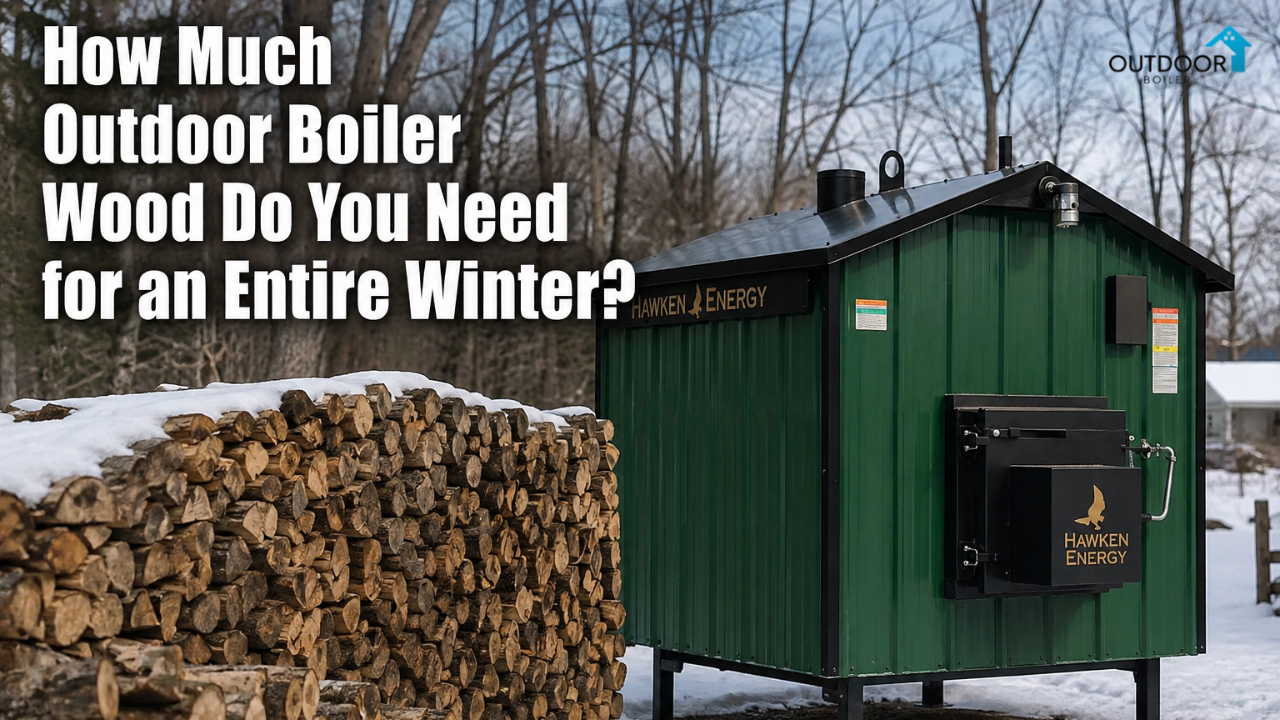
The amount of outdoor boiler wood you need for an entire winter depends on your home’s size, local climate, the type of wood you burn, and the efficiency of your heating system. Most homeowners use between 5 and 12 cords of seasoned outdoor boiler wood during a typical heating season, although actual usage can vary significantly.
Winter heating is one of the biggest expenses for many homeowners, especially in colder regions where freezing temperatures can last for several months. If you rely on an outdoor wood boiler, knowing how much firewood you’ll need before winter arrives can help you avoid running short when you need heat the most.
The challenge is that there is no universal answer. Every home, climate, and heating setup is different. However, understanding the factors that affect wood consumption can help you estimate your needs much more accurately.
What Determines How Much Outdoor Boiler Wood You Need?
Several factors influence how much wood your outdoor boiler will consume throughout the heating season.
Size of Your Home
Larger homes naturally require more heat than smaller ones. A well-insulated 1,500 square foot home will generally use much less firewood than a poorly insulated 3,500 square foot house.
Heat loss through walls, windows, and ceilings plays a major role in determining fuel consumption.
Climate
The colder your winters, the more outdoor boiler wood you’ll need.
For example, homeowners in northern states or Canada often burn considerably more wood than those living in regions with milder winters. Long periods below freezing require the boiler to work much harder to maintain comfortable indoor temperatures.
Quality of Firewood
Not all firewood produces the same amount of heat.
Dense hardwoods such as oak, maple, ash, and hickory contain more energy per cord than softer woods like pine or spruce. Burning seasoned hardwood typically provides longer burn times and higher efficiency.
Wet or freshly cut wood also produces less heat because much of the energy is spent evaporating moisture instead of heating your home. Read the FULL article HERE.
Average Outdoor Boiler Wood Usage
Although every household is different, these general estimates provide a useful starting point.
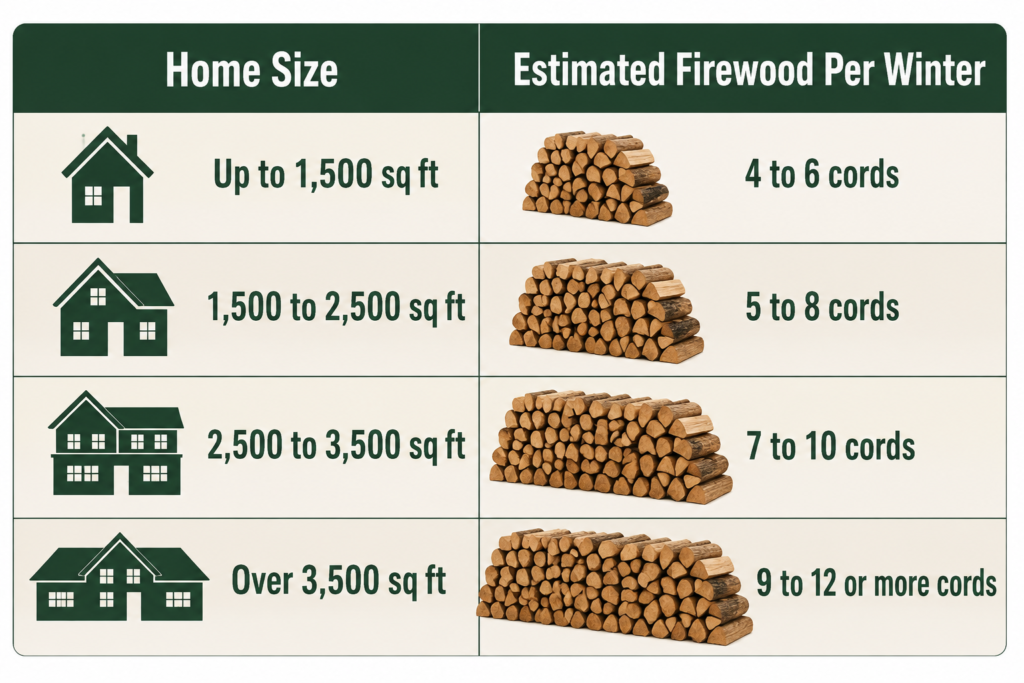
These estimates assume the use of properly seasoned hardwood in an efficient outdoor wood boiler and average winter conditions.
What Is a Cord of Firewood?
A cord is the standard unit used to measure firewood.
One full cord measures:
- 4 feet high
- 4 feet deep
- 8 feet long
This equals 128 cubic feet of stacked wood.
Knowing this measurement makes it easier to compare prices when purchasing firewood and estimate how much storage space you’ll need.
Why Seasoned Wood Makes a Big Difference
Seasoned firewood has typically been dried for at least six to twelve months until its moisture content drops below 20 percent.
Dry wood offers several advantages:
- Produces more usable heat
- Creates less smoke
- Reduces creosote buildup
- Improves boiler efficiency
- Requires fewer reloads
Burning green wood can increase wood consumption because much of the heat is wasted drying the wood before it burns efficiently.
The United States Department of Agriculture recommends using properly seasoned firewood for cleaner and more efficient burning.
Ways to Reduce Outdoor Boiler Wood Consumption
If you’d like your firewood supply to last longer, there are several practical improvements you can make.
Improve Home Insulation
Adding insulation to attics, walls, and crawl spaces helps retain heat and reduces the workload on your boiler.
Seal Air Leaks
Small gaps around windows, doors, and utility penetrations can allow a surprising amount of warm air to escape.
Weather stripping and caulking are inexpensive improvements that often provide noticeable savings.
Burn Dense Hardwood
Whenever possible, choose hardwood species with higher heat values. They burn longer and generally require fewer reloads than softwoods.
Keep Your Boiler Clean
Routine maintenance helps maintain efficient combustion and consistent heat output.
Cleaning ash buildup and inspecting components before the heating season begins can improve performance throughout winter.
How to Estimate Your Own Firewood Needs
If you’ve used an outdoor wood boiler before, reviewing past seasons is one of the easiest ways to estimate future firewood requirements.
Ask yourself:
- How many cords did you burn last winter?
- Was the winter colder or milder than average?
- Did you make any home insulation improvements?
- Will you be heating additional buildings such as garages or workshops?
If you’re using an outdoor boiler for the first time, it’s usually better to prepare slightly more seasoned wood than you expect to need. Leftover firewood continues to season and can be stored for future use if properly stacked and protected from excess moisture.
Common Mistakes That Lead to Higher Wood Usage
Many homeowners unknowingly burn more wood than necessary because of avoidable mistakes.
Common examples include:
- Burning freshly cut wood
- Leaving firewood uncovered during rainy weather
- Neglecting routine boiler maintenance
- Heating poorly insulated buildings
- Opening boiler doors more often than necessary
Addressing these issues can improve heating efficiency while reducing overall fuel consumption.
Final Thoughts
Planning your outdoor boiler wood supply before winter arrives can save time, reduce stress, and help ensure your home stays warm throughout the season. By considering your home’s size, local climate, wood quality, and boiler efficiency, you’ll be able to estimate your firewood needs with greater confidence and avoid unexpected shortages.
If you have questions about choosing the right outdoor boiler, improving heating efficiency, or finding the best solution for your property, contact us. Our team is happy to help you make informed decisions so you can get the most from your heating system throughout the winter.