

There’s a moment most homeowners experience at some point. You’re scrubbing a stubborn white ring from the faucet, or maybe you take a sip of water and notice a faint aftertaste you can’t quite ignore. It’s not dramatic. It’s not alarming. But it’s enough to make you wonder:
Is there something better I could be doing about my water?
The good news is yes — there usually is. The slightly more complicated news is that there are a lot of options out there. Filters, softeners, conditioners, reverse osmosis units. It can start to feel like you need a chemistry degree just to choose the right setup.
Let’s break it down in a way that actually makes sense.
Start with the Basics: What’s in Your Water?
Before looking at products or brands, it’s worth asking a simple question: what problem are you trying to solve?
If your concern is taste, odor, or possible contaminants, you’re likely looking at water filtration. If you’re dealing with scale buildup, stiff laundry, and spotty dishes, hardness minerals may be the issue — and that points toward softening.
Testing your water is the smartest first step. A basic water analysis can reveal hardness levels, chlorine content, total dissolved solids, and other factors. Once you have that data, everything else becomes clearer.
Guesswork tends to lead to overspending. Information leads to better decisions.
When Taste and Clarity Matter Most
Let’s say your primary issue is how the water tastes or smells. Maybe it has that faint swimming-pool hint from chlorine. Or maybe it just doesn’t feel as fresh as bottled water.
This is where water filtration shines.
Carbon filters are excellent at reducing chlorine and organic compounds that affect flavor. Reverse osmosis systems go further, removing dissolved solids and certain impurities. Even simple under-sink filters can make a noticeable difference.
The change is often subtle but meaningful. Coffee tastes smoother. Ice cubes freeze clearer. You might find yourself reaching for tap water more often without thinking twice.
And honestly, that shift in habit is part of the value.
When Hard Water Is the Culprit
If you’ve ever battled chalky white buildup on shower doors or faucets, you’ve met hard water.
Hard water contains calcium and magnesium. These minerals aren’t harmful, but they leave behind scale. Over time, scale can accumulate inside pipes and appliances, reducing efficiency and increasing wear.
That’s where water softeners come in.
Softening systems use an ion exchange process to replace hardness minerals with sodium or potassium. The result? Water that feels smoother and leaves less residue behind.
Soap lathers more easily. Towels feel softer. Appliances face less internal buildup.
It’s not about turning water into something entirely different. It’s about removing the friction that hard minerals create.
Looking at the Bigger Picture
Many homes benefit from a combination approach.
Filtration handles taste, odor, and certain contaminants. Softening addresses hardness and scale. Together, they create a more balanced water experience.
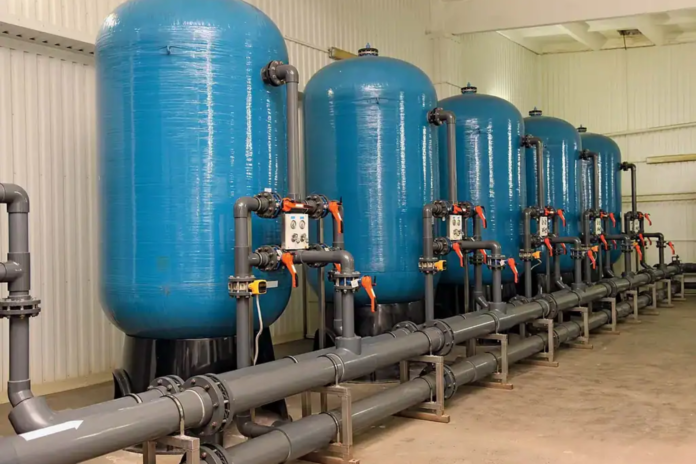
This is why broader water treatment systems often combine multiple technologies into one cohesive setup. A sediment pre-filter might protect a softener. A carbon filter might improve flavor after softening.
It’s layered problem-solving rather than a one-size-fits-all fix.
And when designed properly, it works seamlessly in the background.
Maintenance: The Part Nobody Loves (But Everyone Needs)
Installing a system isn’t the finish line. Filters need replacing. Softeners need salt refills. Periodic inspections keep everything functioning as intended.
The good news? Modern systems are designed for convenience. Maintenance is predictable and manageable.
Set reminders. Build it into your routine.
Because neglected systems don’t perform at their best — and water quality is too important to leave to chance.
Cost vs. Value
It’s fair to ask whether upgrading your water is worth the investment.
While there’s an upfront cost, many homeowners find that improved water quality leads to fewer appliance repairs, less detergent use, and reduced reliance on bottled water.
These savings don’t show up overnight. They accumulate gradually.
And beyond dollars and cents, there’s the comfort factor. Showers feel better. Cleaning takes less effort. Drinking water feels reliable.
That kind of everyday ease is hard to quantify — but easy to appreciate.
Avoiding the Overcomplication Trap
It’s easy to get overwhelmed by technical terms and marketing claims.
But here’s a simpler framework:
- If your issue is taste, smell, or contaminants — focus on filtration.
- If your issue is scale and hardness — focus on softening.
- If you’re experiencing both — consider a combined system.
That’s it.
Start with testing. Define your problem. Choose the solution that aligns with your needs.
Final Thoughts
Water runs through nearly every part of your home. It touches your dishes, your laundry, your skin, your morning coffee.
When it’s working well, you barely notice it. When it isn’t, small frustrations start to add up.
Choosing the right treatment system isn’t about chasing perfection. It’s about reducing those everyday irritations and building confidence in something you use constantly.